Chatbot Lead Generation: Capture and Qualify Leads 24/7
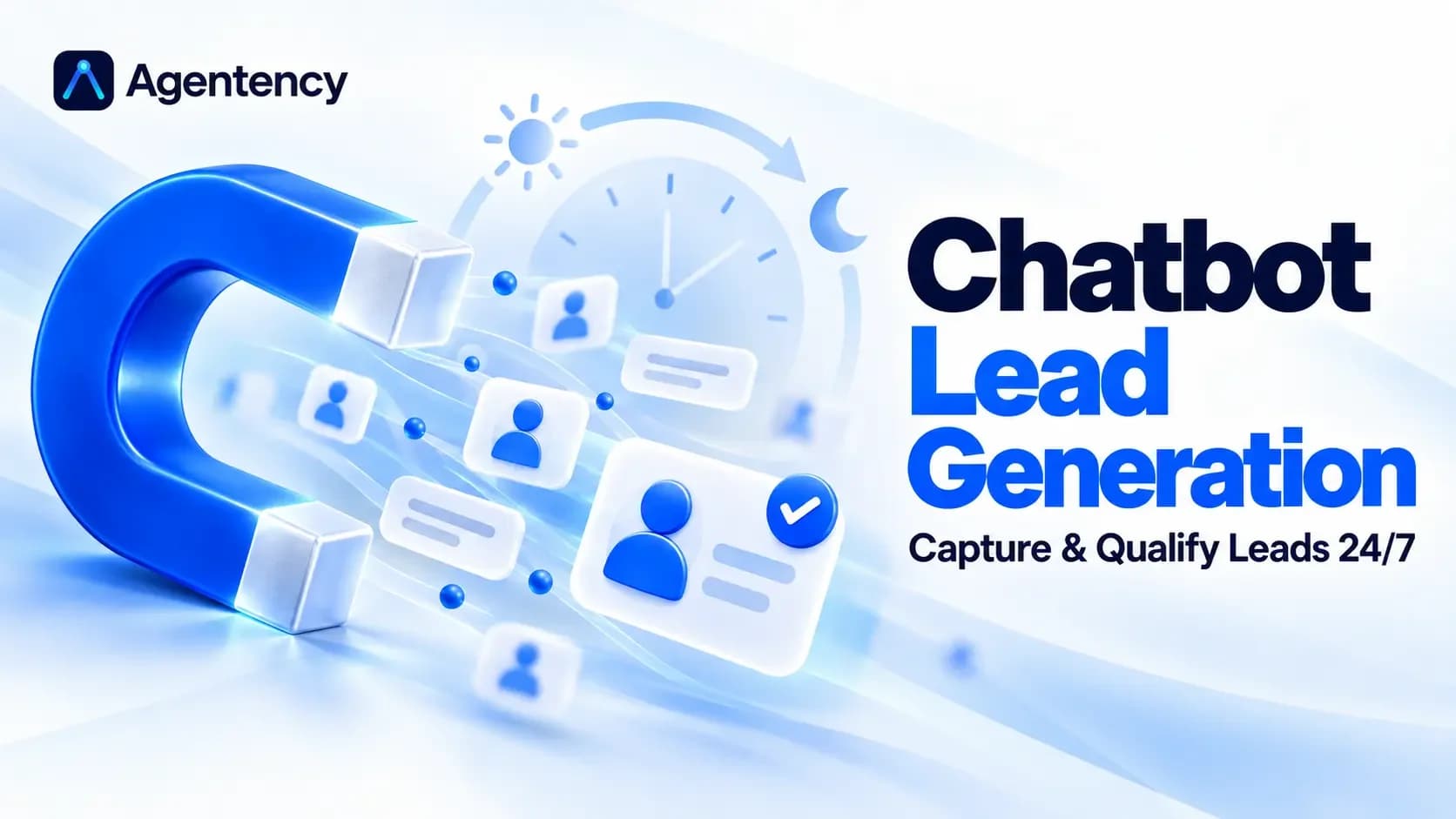
Chatbot lead generation is the use of an AI chatbot on your website or messaging apps to answer visitor questions, collect contact details and qualify prospects in real time, 24/7. A good lead generation chatbot answers first, asks two or three qualifying questions, then sends the lead to your team or CRM.
Most guides on chatbot lead generation stop at "add a bot and collect emails." This one covers real buyer messages, how the channel changes your questions, the cost per lead, and what the law expects.
What Is Chatbot Lead Generation?
Chatbot lead generation means letting a bot hold the first sales conversation for you. A visitor asks a question, the bot answers it, asks a couple of questions back, and passes the lead to a person with everything they need to follow up.
You'll hear a few names for the same idea. A lead capture chatbot focuses on collecting contact details. A lead generation bot also qualifies the lead and decides where it goes next. Some teams call the whole thing conversational lead generation, because the form is replaced by a conversation.
Speed is the reason it works. When Harvard Business Review audited 2,241 US companies in "The Short Life of Online Sales Leads," 23% never responded to a test enquiry at all, and the average response took 42 hours. Firms that got back within an hour were nearly seven times more likely to qualify the lead. A bot replies in seconds, including at 11 pm on a Sunday.
A lead generation chatbot is one job inside a bigger picture. Our guide to the sales AI agent covers the rest.
Put a lead generation chatbot on your site tonight. Train it on your pricing page and FAQs, and let it answer buyers while your team sleeps. Start free, no credit card needed.
Key Benefits of a Lead Generation Chatbot
Here's what chatbot lead generation gets you, with the numbers.
- Always available. Your sales team goes home. The bot doesn't. Salesloft's analysis of more than 30 million conversations found that 39% of them happen outside standard business hours.
- Higher conversion than static forms. People who start a chat are already interested. Leadoo's study of 400 companies across 25 industries found that 14.8% of chatbot conversations turned into leads.
- Automatic qualification. The bot asks your qualifying questions the same way every time, which is what automated lead qualification really means. Your team only talks to leads that fit.
- Instant CRM sync. The lead lands in your CRM, calendar or inbox with the full conversation attached, so nobody retypes anything.
You'll also see claims that chatbots "convert 4x higher" than forms. I couldn't find a published study behind that number, so I don't use it.
How Chatbot Lead Generation Works
Every good setup has four steps.
Answer
The visitor arrived with a question. Answer it first, from your own content. A lead generation bot that demands an email before it helps is just a contact form in a chat bubble.
Qualify
Ask two or three questions that change what your team does next: budget, timeline, and what they're trying to solve. This is your lead qualification process, moved into the conversation. If an answer wouldn't change your follow-up, don't ask. That's AI lead qualification at its simplest.
Capture
Now ask for contact details, and say why. This is where a lead capture chatbot earns its name. "What's the best email to send the floor plans to?" works because the buyer gets something back.
Route
Send the lead where your team actually works: email, CRM or calendar. Hot leads should reach a person within minutes. In the Lead Response Management study by InsideSales.com, leads contacted within five minutes were 21 times more likely to qualify than leads contacted after 30 minutes.
Chatbot vs Contact Form: What the Numbers Say
Unbounce's 2024 benchmark puts the median landing page conversion rate at 6.6%. Leadoo's chatbot figure is 14.8%. So chatbots win, right?
Not quite. The two numbers measure different things. The form number counts everyone who landed on the page. The chatbot number only counts people who chose to start a conversation, and they were already more interested than the average visitor.
That doesn't make chatbots for lead generation a bad bet. Their real advantage is availability, speed and the answer the visitor gets before you ask for anything. The fair test for chatbot lead generation is your own before and after, on the same traffic.
What Buyers Actually Ask, and How the Bot Should Answer
These are the kinds of messages real buyers send, and what the bot should do next. Think of this section as your lead generation chatbot template.
A property question that turns into a viewing request
A real estate agency in New York gets WhatsApp inquiries after its sales team has finished for the day. One buyer writes: "Is the three-bedroom apartment on the Upper West Side still available? Can we view it Sunday?"
The agency's Agentency agent is set up around its approved property information, so it answers the listing questions it can verify. If availability still needs confirmation, it says so and offers to pass the request to an agent.
Then it asks two short questions, one at a time: "What's your budget?" and "What time on Sunday would suit you?" The buyer says their budget is $100K and they prefer the afternoon.
The chat is already on WhatsApp, so the bot doesn't ask for their phone number again. It asks for their name and whether the sales team should contact them about the viewing.
The team gets an email summary with the property, budget, preferred time, contact details and transcript, clearly marked as awaiting confirmation. The agent follows up with the context in hand, and the buyer doesn't repeat anything. That's how a real estate chatbot should work.
A demo request from a small team
"Can we get a live demo Friday morning? We are three people, 30 minutes max."
The bot offers two open slots, confirms one and sends the meeting link. Then it asks which workflow matters most, so the rep knows what to lead with. That's the job of an inbound sales agent.
A same-day appointment
"Any same-day opening with Dr Nour? I only need 15 minutes."
The bot checks the diary, offers what's free and books it. If nothing is open, it adds the patient to the waitlist. That's appointment booking without tying up the front desk.
Lead Qualification Questions by Channel
The channel changes what chatbot lead generation should ask. Most guides skip this.
Website
On your site, the lead generation chatbot knows nothing about the visitor, so it needs a name and one contact method. Ask after you've answered their question.
On WhatsApp you already have the phone number. Don't ask for it again. Spend that question on budget or timing instead. That one change is most of what good WhatsApp lead generation comes down to.
There's also a timing rule. WhatsApp lets businesses send free-form replies only within 24 hours of the customer's last message. After that, you can only reach out with an approved template message. So a lead captured at night needs a follow-up before the next evening, or the conversation gets harder to restart.
On Instagram you have the handle but usually not an email or phone. Ask for the one you'll actually use to follow up.
Run all three channels from one knowledge base and you get omnichannel lead generation without rebuilding the bot for each one.
Capture leads on WhatsApp and your website from one knowledge base. Same agent, same answers, every channel. Start free.
Where Chatbot Lead Generation Goes Wrong
Four problems come up again and again with chatbots for lead generation.
The bot guesses. A made-up price loses the lead or creates a problem. The bot should answer only from approved content and say "I don't know" otherwise.
The bot gates the chat. Asking for name, email and phone before answering anything is the fastest way to empty your chat window.
The handoff goes nowhere. Leads in an inbox nobody checks are worse than no leads, because the buyer is waiting.
Nobody reads the unanswered questions. Each one is a buyer who may have left. If three people asked about installment payments this week and the bot had nothing, write that page.
This is where AI lead qualification needs a human in the loop: someone who reviews the misses every week and closes the gaps.
Lead Generation Rules in the US, UK, Canada and Saudi Arabia
When chatbot lead generation collects someone's name and number, you're collecting personal data. What you must tell people, and what you may do next, changes by country.
United States
If your business is covered by the California Consumer Privacy Act, which applies to larger businesses above set thresholds, you must give Californians a notice at or before collection explaining what you collect and why. The California Attorney General's CCPA page explains who it covers. California's BOT Act also requires you to disclose that a bot is a bot when it's used to sell. And if you plan to follow up by text, get consent for that too.
United Kingdom
Under UK GDPR, people have the right to be informed when you collect their data. When you collect it directly from them, you have to tell them at that point why you're collecting it, how long you'll keep it and who you'll share it with. The ICO's guidance on the right to be informed is clear and practical. A one-line notice in the chat with a link to your privacy policy is a good start.
Canada
PIPEDA requires meaningful consent, which means people need to understand what they're agreeing to. The Office of the Privacy Commissioner's guidelines for obtaining meaningful consent set out how to do that. Your follow-up emails also fall under Canada's Anti-Spam Legislation, where fines for businesses can reach C$10 million.
Saudi Arabia
Saudi Arabia's Personal Data Protection Law is enforced by SDAIA. It restricts sending advertising to someone's personal contact channels without their consent, and that consent has to be documented and easy to withdraw. Fines can reach SAR 5 million. You'll find the law on SDAIA's regulations and policies page. For Saudi businesses, Arabic matters as much as the law.
What Chatbot Lead Generation Costs
Enterprise conversational platforms run into thousands of dollars a month. Small business tools start around $20 to $50. Some charge per seat, some per conversation, some per message.
On Agentency you pay per message, not per seat. The Starter plan is $19 a month for 500 messages. The Standard plan is $99 for 4,000 messages, about 2.5 cents each. Even if a qualifying conversation used 10 messages, that's roughly 25 cents to turn a question into a lead.
That's the number to compare across tools: what does one qualified lead cost you?
The Best Chatbot for Lead Generation by Business Type
There's no single winner. It depends on who you sell to and where your buyers message you.
- Enterprise B2B teams: Drift and Intercom are built for complex routing and big sales teams, and they're priced that way.
- Small businesses and online stores: Tidio and ManyChat are easy to set up and work well on websites and social media.
- Messaging-first businesses: respond.io and Agentency are built around WhatsApp and Instagram, where many buyers now start the conversation.
When you choose a chatbot for lead generation, start with your goal. Booking meetings? Pick one that connects to your calendar. Selling products? Pick one that checks stock and sends payment links. Collecting emails? Almost any tool works, so choose on answer quality.
How to Set Up a Lead Generation Chatbot
Here's the setup I'd follow. It takes an afternoon.
Step 1: Add your sales knowledge
Your lead generation chatbot is only as good as what you feed it. Crawl your website, upload your price list and brochure, and paste your FAQs.
Step 2: Check the answers
Ask the test chat the questions your team is tired of answering. Check each answer's source. Fix the document, not the bot.
Step 3: Write your qualifying questions
Pick two or three. Then write when to hand over, and what it must never promise.
Step 4: Go live on your channels
Add the widget to your site and connect WhatsApp, Instagram or Messenger. Then connect your CRM or calendar through the integrations page.
Step 5: Review the real questions every week
Add answers for whatever the bot missed. The next buyer gets them instantly.
How Agentency Handles Chatbot Lead Generation
Agentency is built for the leads that come to you on your website, WhatsApp or Instagram. You start from a template (Sales, Real estate or Appointments) and train it on the pages and documents you already have.
Every answer comes from your own content, with the source shown. If nothing relevant clears the bar, it doesn't guess. It says it doesn't know and hands the conversation to your team.
Like the best lead generation chatbots, it takes action too: it captures and qualifies the lead, saves it to your CRM, alerts sales, books meetings, checks stock and sends payment links, through Zapier, Make and the API. When a buyer wants a person, it collects their details and emails your team a summary with the full transcript, routed to the right inbox for sales, support or billing.
It answers in more than 90 languages, detected per message, Arabic included. You can also use it as an AI lead responder that replies to every new enquiry in seconds, day or night.
How to Measure Chatbot Lead Generation
Write down your current numbers first. Then track:
- Conversations started: is anyone using it?
- Leads captured: how many chats ended with contact details?
- Qualified rate: how many of those were worth calling?
- Time to first human reply: your side of the deal.
- Unanswered questions: your to-do list for next week.
If it captures leads you'd have missed after hours, it's working.
Final Thoughts
Chatbot lead generation isn't about collecting more emails. It's about answering the buyer while they're interested, asking the few questions that matter and giving your team a clear next step. That's conversational sales working the way it should.
Sales and support in one agent. Train it on the content you already have and go live on your website and WhatsApp in minutes. Start free. Free plan, no credit card, cancel anytime.
Disclaimer: This article is for general information only and is not legal advice. Rules change, so check with a qualified advisor in your country before collecting or using lead data.
About the Author
Omar El Bahr is a Senior Digital Growth Specialist working on SEO, content, and digital growth, and a contributor to the Forbes Communications Council. He writes about AI chatbots, search, and how growing businesses can put new technology to practical use.
Frequently asked questions
How do chatbots generate leads?
A lead generation bot answers the visitor's question, asks a few qualifying questions, collects contact details and sends the lead to your team while the visitor is still interested. On Agentency, that lead arrives by email with a summary and the full transcript, so your team can follow up without starting from scratch.
Can a chatbot qualify leads?
Yes. It asks the same questions your team would ask on a first call, like budget and timeline, and routes the lead based on the answers. Most lead qualification tools work this way. With Agentency, you write those questions and the handover rules in plain language, so there are no flows to build.
What is automated lead qualification using AI?
It's using AI for lead qualification: the bot reads the buyer's answers, even loosely phrased ones, checks them against your criteria and decides the next step. Good AI lead qualification software hands anything unclear to a person. Agentency does exactly that when it can't find a reliable answer in your content.
What questions should a lead generation chatbot ask?
Only questions that change your follow-up, usually budget, timeline and the problem they're solving. Skip "how did you hear about us?" Agentency's Sales template gives you a starting point to adjust.
Are lead generation chatbots worth it?
For most businesses with steady traffic and repeat questions, yes. A chatbot for lead generation earns its place when enquiries arrive after hours and replies are slow. Agentency has a free plan, so you can test it on your own questions before you pay anything.
What is a good chatbot conversion rate?
Leadoo's study found an average of 14.8% of conversations turning into leads, from 35.2% in B2C products to 10.1% in e-commerce. Compare against your own baseline. Agentency's analytics show resolution rate, escalation rate and the questions your agent couldn't answer, so you can see what's holding the number back.
Can a chatbot capture leads on WhatsApp or Instagram?
Yes. WhatsApp lead generation works well because you already have the phone number. Just remember the 24-hour window for free-form replies. Agentency runs on WhatsApp through the official Business API, plus Instagram and Messenger, all from one knowledge base.
How do I connect a chatbot to my CRM?
Most tools connect natively or through Zapier and Make. Map the fields, then send a test lead. Agentency connects through Zapier, Make and its API, and if you don't have a CRM yet, it can email each lead straight to the right inbox.
What is an AI lead generation chatbot?
It uses AI to understand what buyers type instead of forcing them through fixed menus. AI lead generation handles off-script buyers better than rule-based bots. Agentency's agent answers only from the content you give it, and shows the source behind every reply.
Is it legal to collect leads with a chatbot?
Chatbot lead generation is legal as long as you follow the privacy rules where your buyers live. Tell people why you're collecting their details, get consent where required, and disclose the bot. With Agentency, you can add that notice to the welcome message so every conversation starts with it.